Content Notes
Heat intolerance • chronic illness • fatigue • folklore discussion of gods/spirits • seasonal body limits
Welcome back to the Den.
This is The Crippled Cryptid.
It’s Folklore Wednesday.
The lights are lower than usual.
The air is listening.
This is the day we loosen the knots and let the old stories stretch their limbs.
On Folklore Wednesdays, we talk about the things that learned our names before we learned theirs.
French spirits and English ghosts.
Indigenous stories that remember the land better than maps ever did.
Old gods. New monsters. Familiar shapes wearing unfamiliar faces.
This is the day of hedge magic and hearth magic.
Of charms whispered into sleeves.
Of creatures that don’t wait for nightfall and spirits that have never respected bedtime.
Some of what lives here bumps in the dark.
Some of it walks openly in daylight, unbothered, unafraid, and very aware of itself.
You don’t need to believe.
You just need to be respectful.
You just need to listen.
Pull your chair closer.
Folklore is a living thing.
And today, it’s awake.
On Today’s Menu: Sun Myths and the Lie That Light Is Gentle
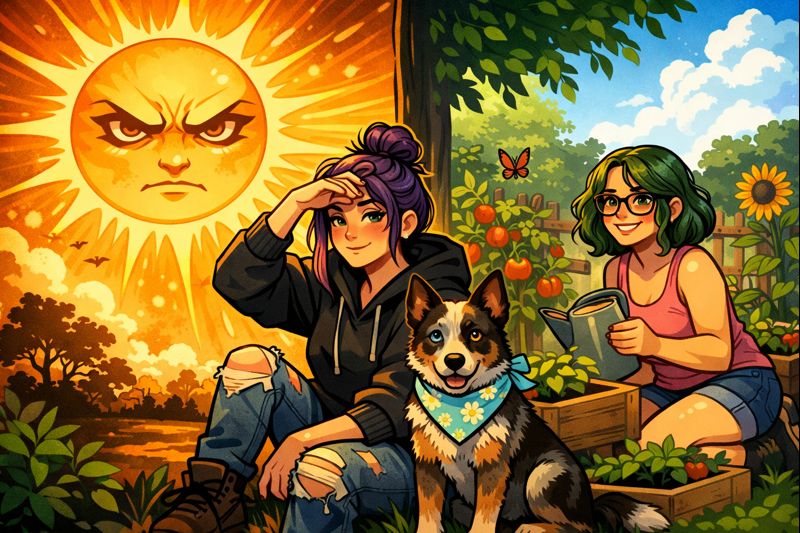
June is here, and that means it’s finally starting to warm up in Illinois. The birds are loud about it. The garden is planted. Luna is starting to thrive again now that the cold has loosened its grip.
But folklore does not pretend the sun is kind.
Across cultures, the sun is powerful, necessary, and dangerous when disrespected.
Sun gods burn cities.
Sun spirits demand offerings.
Daylight exposes what night mercifully hid.
Or kept hidden.
In many traditions, the sun is not a healer. It is a witness.
June folklore reminds us that illumination has a cost. Things brought into the light must survive being seen.
The sun feeds crops and scorches fields.
It wakes bodies and drains them.
It tells the truth whether we asked for it or not.
This is not a month for softness.
It’s a month for boundaries.
For chronically ill people like me, that means remembering the limits our bodies set during warmer months and knowing they are not the same limits we had in winter. It means gratitude for borrowed energy, paired with the discipline not to spend it all at once.
Summer is generous. Summer is expensive.
Summer is a different beast altogether.
These are also the months of joy. Farmer’s markets opening their tents. Fresh produce everywhere. The slow hope of the first garden harvest. We don’t know what will arrive first, but I’m quietly rooting for the golden cherry tomatoes from Harm’s Farms. They were my favorite plant last year, and I suspect they’ll keep their crown.
With the sun comes sun-work.
Sun-dried tomatoes, hopefully from our own garden.
Sun teas steeping on the porch.
Not because the sun is gentle.
But because it is powerful, and power deserves respect.
Sun Stories That Warn, Not Comfort
In folklore, the sun is rarely a soft god.
In Japan, Amaterasu’s withdrawal plunges the world into darkness, and her return requires ritual, mirrors, and careful persuasion. Light must be invited back, not demanded.
In Norse stories, Sól races her chariot across the sky, chased endlessly by a wolf. The sun survives because it keeps moving. Stillness would mean being devoured.
In Greek myth, Helios sees everything. Nothing hides from him. When mortals forget that, cities burn and sons fall from the sky.
These stories aren’t about warmth. They’re about proximity.
Get too close, and you scorch.
Ignore it, and nothing grows.
Folklore doesn’t ask us to fear the sun.
It asks us to negotiate with it.
And many of the oldest teachings about that negotiation come from people who watched the land long enough to know what the sun could do.
Remembering the Teachings, Not Taking Them
In many Anishinaabe teachings, the sun is not a symbol. It is a relative. A presence with responsibilities, limits, and expectations. The sun gives life, yes, but it can also take it if approached without respect.
There are teachings about rising with the light and resting when it becomes too much. About listening to the body as part of listening to the land. About understanding that endurance is not the same thing as honor.
These stories were never meant to be aesthetic. They were survival knowledge. Passed down because people needed to live.
I don’t share these teachings as an authority. I share them as a descendant still learning what it means to listen properly.
M&M carries Métis and Iroquois roots of her own, traditions that also understand the sun as something relational rather than romantic. Across nations, across stories, the truth echoes:
The sun is not here to serve us.
We are here to live with it.
Practical Sun Magic (Because Survival Is Still Magic)
Folklore survives because it’s useful. Because it feeds people. Because it keeps bodies going.
Below are a few gentle sun-works. None of them require belief. Only patience.
Porch Sun Tea (The Everyday Offering)
You’ll need:
• A glass jar with a lid
• Cold water
• Tea bags or loose-leaf tea
How:
Fill the jar with water. Add tea. Set it in indirect sunlight for 2–4 hours. Bring it inside before the water warms too much. Strain if needed. Refrigerate.
Notes:
Black tea is traditional, but herbal teas are safer for longer steeps.
Gentle Summer Sun Tea Blends
Heat-Tired Blend
• Hibiscus
• Peppermint
• A little lemon balm
Bright, cooling, and good for days when the sun took more than it gave.
Garden Quiet Blend
• Chamomile
• Lavender
• A pinch of rosemary
For evenings when your body won’t come down from the day.
Golden Hour Blend
• Green tea
• Dried orange peel
• Honey added after chilling
Light, steady, and grounding.
Sun-Dried Tomatoes (Old Kitchen Lore)
How:
Slice tomatoes thin. Salt lightly. Lay them on a rack or tray. Cover with cheesecloth. Leave in full sun during the day and bring in at night. Repeat for several days until leathery, not brittle.
Why folklore loves this:
It’s preservation by attention. You have to keep checking. Keep moving them. Keep protecting them. The sun helps, but only if you show up too.
This is not passive magic.
It’s cooperative.
The Dog Who Watches the Light
Luna understands the sun in ways I sometimes forget.
She knows when it’s time to move into the shade. When my body has stayed out too long. When the heat has shifted from pleasant to dangerous before my brain catches up.
In folklore, animals are often messengers. Guardians. Early warning systems that don’t rely on language.
Luna is that for me.
She is not mystical because she is rare.
She is mystical because she pays attention.
When the sun is too much, she presses close. When my energy spikes and starts to tip into danger, she interrupts. She helps me negotiate with a force bigger than both of us.
Folklore never separated survival from companionship.
Neither do we.
The Closing of the Circle
That’s where we’ll leave the circle open for now.
If something followed you out of this story, you’re not in trouble. Folklore has always liked company.
If something here felt familiar, trust that. Old stories recognize their own.
Folklore Wednesdays are about remembering. About honoring what survived being passed mouth to mouth, fire to fire, body to body.
Thank you for sitting in the magic with me.
For listening instead of demanding proof.
For letting strange things exist without taming them.
Until next time, keep a light on if you need it.
Or don’t. Some of us see just fine in the dark.
Love you. Now say it back.
-Sky
© The Crippled Cryptid
Disability, folklore, and survival magic.
(And always a little bit of dog fur for morale.)
🔗 https://linktr.ee/skylanarissa
No pressure to donate. Staying, reading, sharing is already an offering.
If you want to support the long, slow work of staying alive and telling the truth:
💜 https://www.gofundme.com/f/support-skys-journey-to-health-and-mobility


Leave a comment