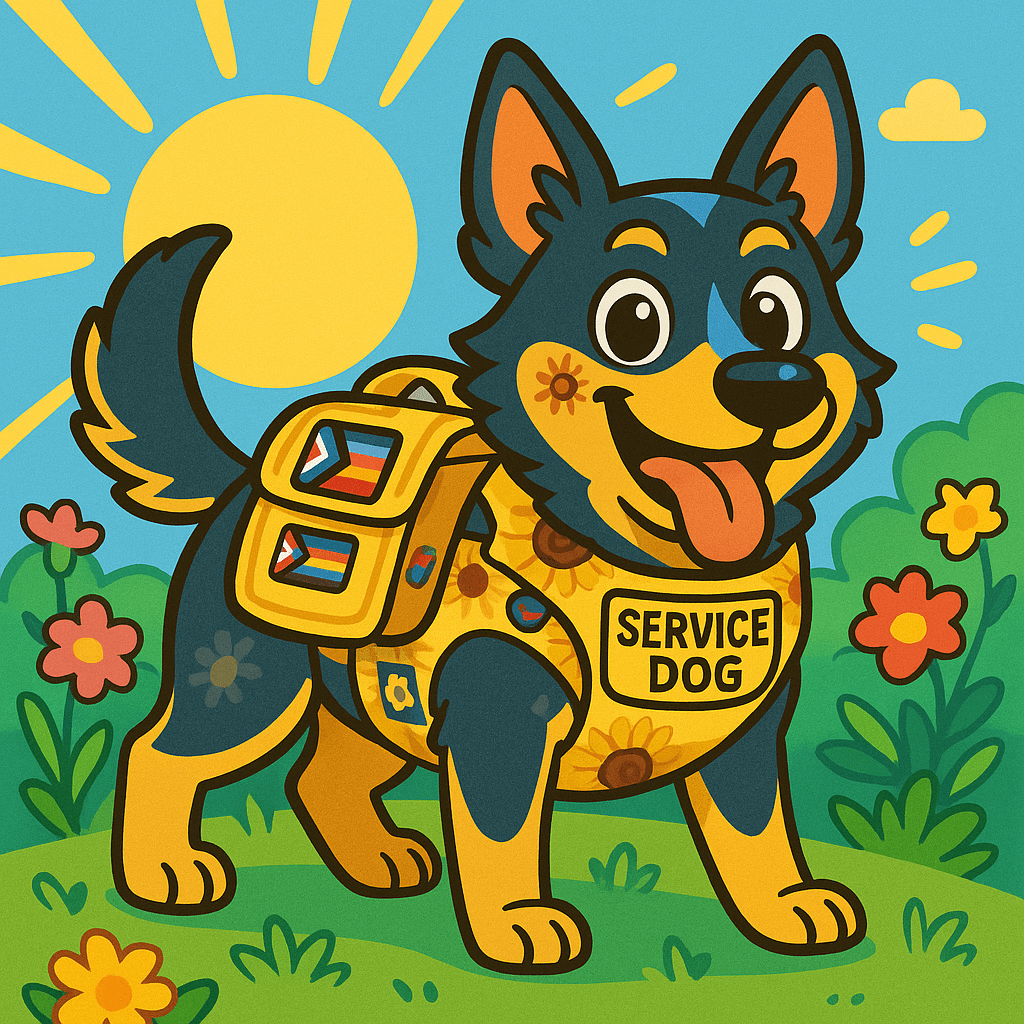
Hello again, my beloved creepie crawlies!
The most interesting thing happened to me the other night, and I think we should talk about it. But first, let me say- this post is not meant to shame or call out anyone. The person I spoke with didn’t want to be named or put in the spotlight, and I completely respect that. We had an amazing, thoughtful conversation, and I’m grateful they trusted me enough to ask what they did.
So, what sparked all this? I was clearing out my Instagram DMs- deleting spam, ignoring those weird fake sugar daddy offers (seriously, why do they all want iTunes gift cards?), and sorting through notifications- when I came across a message that made me stop.
It read:
“Hey Sky, I read your blog. I’ve been wanting to ask for a while now but didn’t know how to word it. Isn’t cripple a derogatory word? Why would you go around calling yourself a slur? No hate, just curious, sorry.”
Let’s talk about it.
Cripple is a Harsh Word. But It’s Also Mine.
According to the Oxford dictionary, cripple (verb) means “to cause severe and disabling damage” or to render someone unable to walk or move normally. As a noun, it refers to “a person with a severe limitation of a specific kind.”
Most modern disability style guides- including the National Center on Disability and Journalism (NCDJ)- recommend avoiding the word cripple unless you’re referencing the Crip movement or using it in a direct quote. For many, it’s an outdated and offensive term that should be left in the past.
And honestly? That’s fair.
But like I told my new friend in our DMs: I believe in the power of reclamation.
Language, Power, and Personal Choice
Marginalized communities have long used reclamation to take back words once used to harm them. The LGBTQIA+ community has reclaimed words like queer. The disability community has done similar work with terms like crip and spoonie- words some find empowering and others reject entirely.
I’m not here to speak for everyone. I can’t. But for me personally, choosing to call myself a cripple isn’t about being edgy or shocking. It’s about survival. About ownership. About turning a word that once crushed me into a badge of strength.
I remember the first time someone called me a cripple. I was twelve. A boy in my seventh-grade class said it during a flare of my MCAS. I’ll never forget how small it made me feel- how inhuman. I won’t name him (he has kids now, maybe he’s changed), but it stuck with me.
Later, when I heard the word in the movie Thirteen– spoken softly in a poem by the character Tracy- it didn’t sting the same way. It felt raw and real. That shift in context showed me that maybe, just maybe, some words don’t have to stay ugly forever.
Reclamation Isn’t One-Size-Fits-All
Reclaiming a word is nuanced. It’s deeply personal. Not everyone in the disabled or chronic illness community wants anything to do with the word cripple, and that’s okay. Some find it too painful. Others, like me, use it to take back autonomy and self-definition.
Both choices are valid.
Reclamation can also look different even within the same community. For me, it’s about rewriting the story that word tried to write for me. It’s about finding power in a place I was once made to feel powerless.
Why I Hid My Limp
Here’s the thing: cripple is the reason I taught myself to walk without a limp.
Sure, part of that was about preventing injury (I sublux and dislocate joints easily thanks to EDS). But the bigger reason? I didn’t want to be seen as disabled. Especially not as a young person who’s visibly and invisibly disabled.
There’s this stigma when you’re disabled and you don’t “look the part” or maybe, like me, you don’t always look the part. The number of times I’ve been confronted in parking lots- accused of faking my disability, stealing a handicap placard, or being too “young” to park there- would blow your mind. People have literally walked up to my car to yell at me.
I’ve been asked numerous times if my cane is “just a prop.” I’ve gotten side-eyes using a rollator. Even doctors forget I have one until they see it in the exam room. It’s exhausting. But if they feel that way, I wonder how they think I feel when I’m the one lugging the damn things around all the time. Sometimes, they hurt more than they help.
One time, an older woman told me I was “stealing” a spot meant for people like her. I didn’t know how to explain that those spots are for disabled people- not just elderly ones. (Although shoutout to the few grocery stores with “senior-only” spots- that’s a different thing, and I support that.) Because little does Nosey Susan know, there are some days that I wouldn’t leave my house at all if it weren’t for my handicapped parking placard- not to the doctor, not to the pharmacy for medications that I need, and not to the grocery store to feed my family.
So Why Do I Use the Word?
Because I earned it.
I earned cripple the way that veterans earned their own title. Maybe it wasn’t fighting an over-seas kind of war but, some wars are fought internally.
Because it was used to hurt me, and now I use it to heal.
Because it reminds me that language is powerful- and I am, too.
I use the word cripple because I am taking it back. For myself. For my writing. For my journey.
Not everyone has to do the same. You don’t have to agree. But I hope, after reading this, you’ll understand.
One Last Thing
To the person who messaged me: thank you.
Thank you for asking with kindness.
Thank you for giving me the chance to talk about something that matters to me and to others in this community.
If anyone else ever wants to reach out- whether it’s a question like this or just a cryptid looking for connection- my DMs are always open. You’ll find a Linktree at the bottom of every post from here on out. I might be a hermit, but I truly love hearing from you all.
Until next time-
Keep creeping, keep questioning, and never stop reclaiming your power.
With love,
Sky 🖤
The Crippled Cryptid


Leave a comment