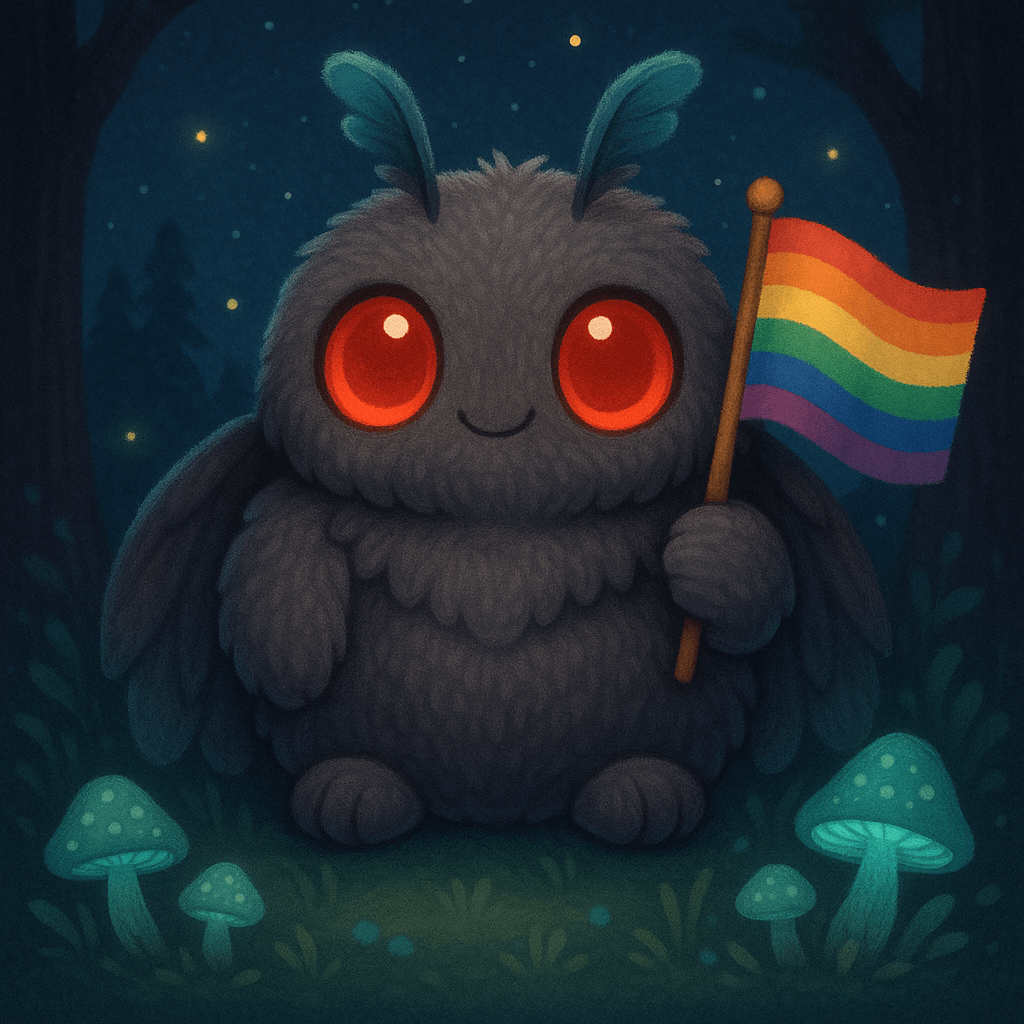
Folklore Wednesday- Pride Month Special Edition
Folklore has always carved out space for the strange, the powerful, and the beautifully other.
Sounds pretty queer to me.
Now, I know what you’re thinking: Sky, we just got a Folklore Wednesday post- it hasn’t even been two weeks! And to that I say: I know! But it’s Pride Month, and that only comes once a year. Some topics deserve more than one spotlight, especially when they intersect with identity, culture, and personal survival. Queerness in folklore is one of those topics.
So today, we’re diving into how queerness shows up in myth, folklore, and fairytales- from gender-shifting deities and trans-coded creatures to the monstrous metaphors that have long echoed our existence. These stories have always been here. We just need to look a little closer.
So, get cozy, grab something warm or sweet (yes, Faelings, I see you), and let’s step into the liminal spaces where folklore and queerness meet.
Queer-Coded Gods and Gender-Shifting Deities
Queerness is nothing new to mythology. Nearly every culture has figures who shift gender, defy binary norms, or express love and identity in ways that challenge what society deems “acceptable.”
Take Loki, from Norse mythology. (No, Marvel, not you.) Loki is the shapeshifting trickster and the literal mother of the eight-legged horse Sleipnir. Chaotic, clever, and utterly fluid- Loki embodies queerness in every sense, from transformation to parenthood.
In Greek mythology, there’s Tiresias, the seer who lived as both a man and a woman, and who gained divine insight because of it. Or consider Shikhandi from the Mahabharata, born female but living- and fighting- as a man in battle, honored in their own right.
One of my favorites is Inari, the Japanese kami of fertility, rice, and prosperity. Inari’s gender is fluid, changing depending on who is observing them. Sometimes male, sometimes female, sometimes both- or neither. That’s sacred, liminal queerness at its finest.
These aren’t outliers. They’re reminders that gender diversity and fluidity have always existed- and have often been treated as powerful or even divine. (So, keep that in mind the next time you’re questioning your own divinity.)
Monsters, Changelings, and the Trans-Coded Other
But, folklore isn’t just full of gods- it’s full of shapeshifters, skin-changers, and liminal beings who live outside the bounds of what’s “normal.”
Selkies, for example, shed their skins and shift between identities. Mermaids and sirens dwell between sea and shore, sometimes described with androgynous beauty, or as beings who blur gender lines. They belong to no single world- just like many of us who don’t fit in those neat little societal boxes.
Changelings are another fascinating example, and one you’ll hear a lot more about in my WIP, Something Wicked, as well as future Folklore Wednesday posts. These beings are often seen as “outsiders in their own skin,” mistaken for something they’re not, swapped out, rejected, or misunderstood. It’s hard not to see the metaphor for trans and neurodivergent experiences there.
And let’s not forget the Wild Man (or Woman) of the Woods- figures who abandon society’s expectations altogether, including gender norms. They live freely, outside imposed roles. Sounds like a dream to me, honestly. (Why are we imposing gender norms on anyone, anyways? Just let them live their lives authentically, as long as they aren’t hurting anyone.)
The Monster as Metaphor: Queerness, Illness, and Othering
Throughout history, monsters have often been coded as queer. Vampires, werewolves, witches- all feared for being unnatural, too powerful, too independent, too other.
Think about it. Vampires? They’re queer-coded all the way down. They exist outside traditional norms, often expressing taboo desire, living eternally in bodies that challenge human limits. The longing, the secrecy, the hunger- it’s all there.
Witches? Often gender-nonconforming, living outside community structures, wielding power that makes others uncomfortable. Sometimes solitary, sometimes sapphic-coded, but always in control of their own identity and space.
Even chronic illness shows up in these metaphors. Pale skin, aversion to light, needing iron or blood- hello, anemia! It’s me! We joke, but the symbolism is real. Stories of the monstrous often mirror stories of those who’ve been isolated, judged, or “othered” for something beyond their control.
And yes, that includes being queer.
Happily Never After? Queer Readings of Fairytales
Let’s talk about the “princess marries the prince” trope for a second. Yawn. We all saw Belle’s face at the end of Disney’s Beauty and the Beast (1991) when the Beast turned human. She looked so disappointed. You can’t tell me she wasn’t into that fur and teeth situation. But that’s a whole other conversation that I don’t think anyone is ready for.
- Queer readers have been reinterpreting these stories for ages. The Prince and the Dressmaker is one beautiful modern retelling, and indie fairytale authors have started giving us what we’ve always needed- queer leads, trans-coded royalty, love stories that actually reflect us.
- Mulan? She gave us hope- until the message got derailed by the need to “dress the part.” It’s a familiar sting be yourself, but only in ways that make others comfortable. That’s why retellings matter. Reclaiming the narrative matters.
A Note on Cultural Respect
Before we go any further: not every shapeshifting or gender-fluid god is “queer” in the Western sense. We can find deep, personal meaning in these stories- but we must do so with care, respect, and cultural awareness.
Say it with me now: It’s 2025. Cultural appropriation is gross. We do not do that here.
Honor the origin. Learn from it. Then ask yourself: What does this mean to me, and how can I hold it respectfully alongside its original context?
Queer People Have Always Existed
That’s the truth. We’ve always been here- telling stories, shifting shape, falling in love, building communities in the margins. We’re in ancient myths, oral histories, written texts, and whispered tales passed from grandmother to grandchild.
We existed before laws told us who we could love. We existed before binaries. Before closets. And we’ll continue to exist, thrive, and celebrate whether society approves or not.
So, if you’re feeling alone this Pride- or any other day of the year- look to the stories. Look to the myths, the monsters, the gods, the outcasts, and the rebels. I promise you’ll find someone who sees you. Someone who’s already lived your truth in a story older than memory.
Be safe. Be proud. Be unapologetically you.
Happy Pride, Faelings. 🌈
-Sky, The Crippled Cryptid
📚 Queer Folklore Book Recs (all of which are on my TBR)
Here’s a few reads to get you started if you want to dig into queer-coded folklore, fairy tales, and myth-inspired fantasy:
- The Priory of the Orange Tree by Samantha Shannon – High fantasy with dragons, sapphic romance, and a whole lot of mythic weight.
- Silver in the Wood by Emily Tesh – Green Man folklore meets gentle queerness and dark forests.
- The Deep by Rivers Solomon – Inspired by mermaid myths and the Middle Passage, this novella reimagines memory, identity, and belonging.
- The Witch King by H.E. Edgmon – A trans witch with fey heritage? Yes please.
- Girls Made of Snow and Glass by Melissa Bashardoust – A sapphic Snow White retelling that reclaims agency and identity.
- Peter Darling by Austin Chant – A queer, trans retelling of Peter Pan that’ll break and heal your heart.
More coming soon in a future Bookwyrm’s Lair post. And if you have a favorite queer-coded myth or story, drop it in the comments or send me a message- I’d love to feature it.


Leave a comment