Content Warnings:
This post discusses food insecurity, public ableism, discrimination against invisible disabilities, and medical trauma/gaslighting. Please take care of yourselves as you read.
A Different Kind of Pantry Day
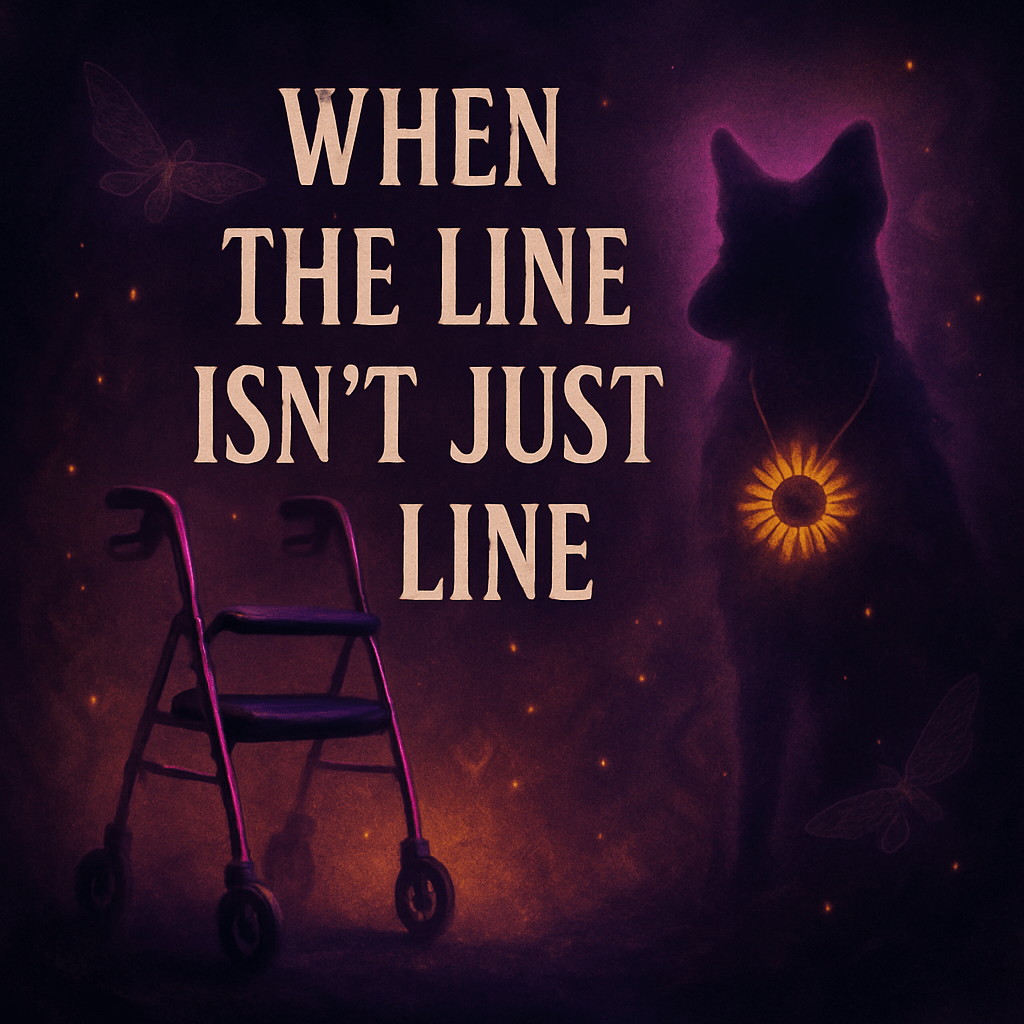
Today was a pantry day. Yes, that pantry- the one where, just last week, someone grabbed my walker and shoved my arms off it like I was in the way of their need. If you haven’t read that post, and you’d like to, I can leave it linked right here. I also made a mini TikTok rant about it because, I was having some pretty big feelings. That kind of violation sticks with you. It makes you hesitate, even when you’re desperate.
But today? Today was different.
We met someone kind. I didn’t get his name, but we talked for a while in line- about Ehlers-Danlos Syndrome (EDS), about what life looks like for us, for him and his wife, about the struggle to find pantries that accommodate disabled folks, the rising cost of food, his autistic 16-year-old, and life in general. He mentioned another local pantry that lets disabled people park up front and even enter early. That’s how it should be. (We both agreed.)
Unfortunately, even when this pantry tried to implement early entry for disabled folks today, there was still a scene. People swarmed the doors. One all but shouted, “I’m elderly, I’m going in!” Another snapped, “I’m elderly and disabled!”- as if survival is a competition.
One person turned to me and asked:
“How long have you been using that walker?”
As if the length of time someone has been visibly disabled determines whether they deserve accommodations. (Spoiler: it doesn’t.)
The kind stranger stood up for me. He wouldn’t let them push me through an overcrowded doorway. Even when I had to say, “I have a seizure disorder- if I hit the floor and I’m stuck in a doorway, no one will be able to help me,” people still tried to push forward. This isn’t a pantry I usually bring Luna to- out of respect, as it’s run by a mosque and I feel safe enough to go without her usually– but in moments like that, I question if I should.
He reminded people to let disabled patrons go in when it’s their turn. That meant more than I can say.
The Policing of Disability
Not everyone was on our side.
One man- someone I’ve seen before- began loudly calling people out:
“You’re not disabled. You can’t go in.”
To quite literally everyone he thought didn’t “look” disabled.
Now listen, I get it. Some folks admit they aren’t disabled- they’re just trying to avoid the heat, or they don’t want to wait for their turn. I know that sucks. I’ve seen it, too. But you know what else sucks? Feeling like you have to defend your existence just to pick up the food you need to survive.
Because no one has the right to your private medical history. Not unless they’re your provider- and even then, there are boundaries.
This wasn’t concern. This was bigotry. Plain and simple.
A woman nearby, new to this pantry, sat near us once inside and shared that the man’s behavior made her incredibly uncomfortable and unsure if she ever wanted to return. She has a traumatic brain injury (TBI) and PTSD- disabilities that aren’t visible. She shouldn’t have to explain herself to a stranger just to be fed. Mind you this was her first time there.
Not All Disabilities Are Visible
This was only our fourth time at this pantry- and I’ve been questioned about my disability status every single time. (Both by him, and others.)
Unless you see my mobility aids, notice the placard in my car, or watch me move closely, you probably wouldn’t know I’m disabled. That doesn’t make it less real.
That doesn’t mean I should be interrogated.
We shouldn’t have to walk around with our diagnoses pinned to our shirts like we’re living in Nazi Germany.
Speaking Up- and Being Heard
Once inside, I spoke with the coordinator- let’s call her “C.” I told her everything:
- The swarming when disabled patrons are called in (not just today but every time we’ve come).
- The able-bodied people cutting the line.
- The laughter, the dismissive comments, the way our diagnoses are treated like punchlines.
And to her credit, she listened. Really listened. She looked horrified and promised change. Moving forward, they’ll post someone at the door to enforce the system. When it’s time for disabled patrons to enter, they’ll be the only ones allowed through.
That’s all I want. (All a lot of the people who need the accommodation want.)
I want the double amputee I saw waiting outside last week to be treated with dignity. I want to stop having to defend my right to food. I want us to be treated like we matter.
Medical Messes and Another Kind of Dismissal
As if the pantry mess wasn’t enough, let’s talk about last Wednesday’s orthopedic appointment.
It was a disaster.
The ortho doc twisted and turned my already-damaged knee- two weeks into the injury- until I was in tears. And I don’t cry easily. I live with CRPS, fibromyalgia, and daily chronic pain. But this? This was too much.
I left with nothing but a script for PT. No treatment plan. No support. Just more pain.
Mind you, I have been in PT before. I’ve also told them that PT doesn’t typically work for me because it’s hard to find a PT clinic that understands EDS bodies. If you don’t know, EDS bodies are typically hypermobile, which means that if I get overworked the wrong way… it could have dire consequences.
And Then… The Headache Clinic
Remember that July 2nd appointment at the Diamond Headache Clinic’s Purath location? The one I waited months for? The one I thought might finally help?
Yeah.
Waste. Of. Time.
We drove over 90 minutes to be told that my migraines and seizures are probably the result of childhood trauma- specifically my grandfather’s chronic illness, cancer, and death.
That was the diagnosis. That was the entire explanation.
Never mind the EDS. Never mind the POTS. Never mind the MCAS, the neurological complexity, or the multiple failed medications. Forget the 14-page intake packet I handwrote because they wouldn’t accept digital files. Forget requesting records from Northwestern because they didn’t do that.
She saw “trauma” and decided I was a headcase.
No, I’m Not Going Inpatient
Then came the kicker:
“The only way we can really help is if you go inpatient at our Chicago facility.”
Disrespectfully? No.
I’m not interested in being gaslit into believing that my systemic and neurological conditions are just “unprocessed grief” from 20-years ago.
Have I been to therapy? No.
Have I grown since childhood? Yes.
Have I learned to trust my body and my experience? Also yes.
Why I’m Sharing This
This isn’t just a vent.
It’s a glimpse of what disabled folks face every day.
Food insecurity doesn’t erase your dignity. You deserve to be treated with respect.
Invisible disability doesn’t mean imaginary disability.
And medical trauma doesn’t disappear just because someone wears a white coat.
Looking Ahead
It’s Disability Pride Month. I might write more soon- maybe something about my family’s history with disability, medical trauma, and medical gaslighting, or how disability shows up in the folklore I love.
If that’s something you’d like to read about, let me know.
And if you’re disabled and reading this?
You’re not alone.
You’re not broken.
And you don’t owe anyone your worth.
Stay weird. Stay witchy.
With love,
💜 Sky, The Crippled Cryptid


Leave a comment