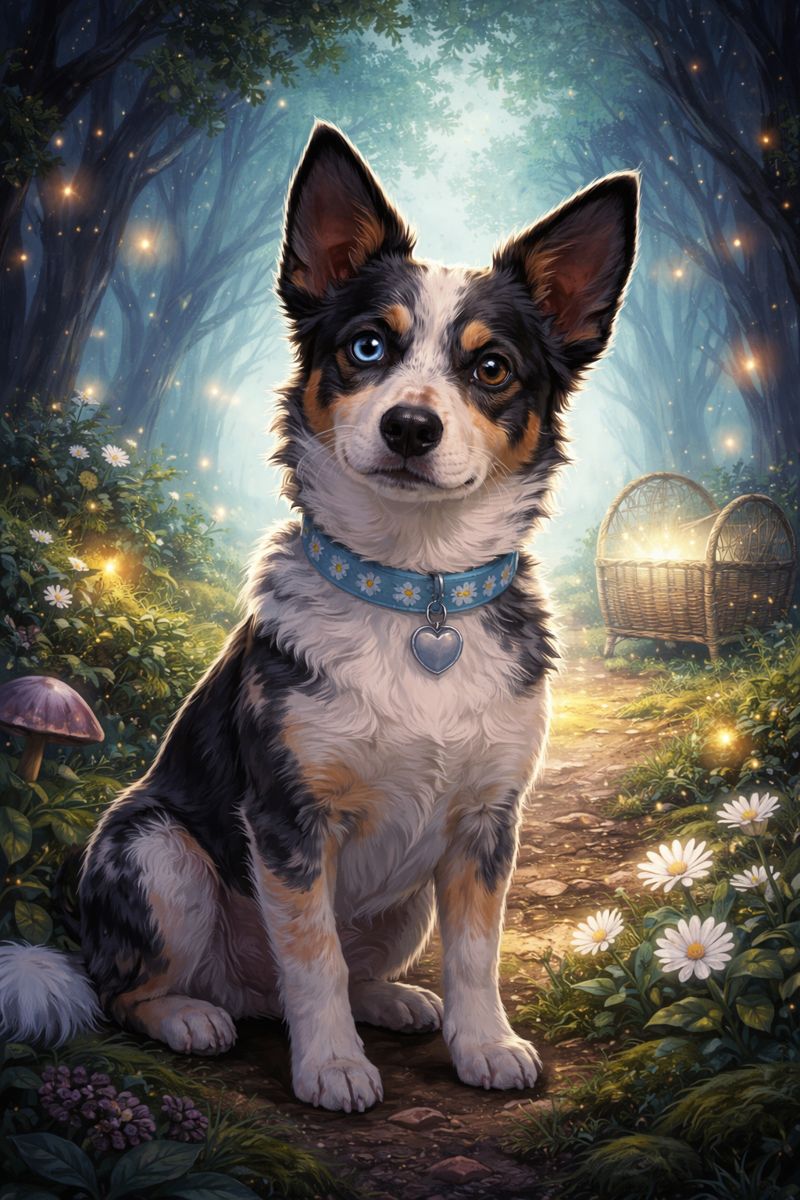
Why Old Stories Still Decide Who Belongs
Welcome back to the Den.
This is The Crippled Cryptid.
It’s Folklore Wednesday.
The lights are lower than usual.
The air is listening.
This is the day we loosen the knots and let the old stories stretch their limbs.
On Folklore Wednesdays, we talk about the things that learned our names before we learned theirs.
French spirits and English ghosts.
Indigenous stories that remember the land better than maps ever did.
Old gods. New monsters. Familiar shapes wearing unfamiliar faces.
This is the day of hedge magic and hearth magic.
Of charms whispered into sleeves.
Of creatures that don’t wait for nightfall and spirits that have never respected bedtime.
Some of what lives here bumps in the dark.
Some of it walks openly in daylight, unbothered, unafraid, and very aware of itself.
You don’t need to believe.
You just need to be respectful.
You just need to listen.
Pull your chair closer.
Folklore is a living thing.
And today, it’s awake.
On Today’s Menu: Changelings, Cradles, & Community Fear
Content Notes / Trigger Warnings
Infant mortality, disability and chronic illness, neurodivergence and autism, historical and cultural violence toward disabled children, medical ableism, reproductive coercion, discussion of abortion and “quality of life” rhetoric rooted in ableism.
Take breaks if you need to.
This story will still be here when you come back.
Do you remember when I mentioned, almost in passing, that there was a time when chronically ill and disabled children were thought to be changelings? I promised you that we would talk about that.
Today is that day.
The day we talk about the way people once believed disabled and chronically ill children were something else.
Other.
Not ours.
Not metaphorically.
Not kindly.
Literally.
Changelings were never really about fairies.
They were about who people could not bear to keep.
Children who didn’t develop “correctly.”
Babies who cried too much, spoke too little, moved strangely, failed to thrive, or simply were not what their parents expected.
People believed those children could not truly be theirs.
So, they had to be something else.
Something other.
Something not-quite-human.
Something… Fae.
And it didn’t stop with physical disability.
Neurodivergent children were especially targeted.
Autistic children.
Nonverbal children.
Children whose minds moved differently through the world.
Children whose inner lives frightened adults because they could not be easily explained, managed, or controlled.
If a child could not be understood, they were explained away.
Changelings are often framed as fairy stories. Whimsical. Creepy. Entertaining folklore meant to make children behave or to frighten people around a fire.
But changeling myths are not just about fairies.
They are about grief.
They are about fear.
They are about communities trying to survive in a world where infant mortality was common, medicine was limited, and answers were scarce.
These stories look different across cultures and regions, but the fear beneath them is often the same.
When a child became ill, changed suddenly, or never met expected milestones, people searched for meaning. Folklore gave shape to the unexplainable. It gave language to terror. It gave structure to loss.
If a fairy took your child, then it wasn’t your fault.
If something else replaced them, then maybe there was still hope.
Maybe the “real” child could be returned.
These stories were born from love and fear tangled together.
But the consequences were often brutal.
Because once a child was no longer seen as fully human, anything could be justified.
Exposure.
Abandonment.
Violence framed as cure.
Cruelty disguised as rescue.
The Echoes We Still Hear
This post isn’t just about the past.
It’s about how those same fears still whisper through modern medicine, parenting, and policy.
I am writing this as someone whose body has spent a lifetime being misunderstood, medicalized, and measured against someone else’s idea of normal.
It’s about doctors who suggest that a disabled child should not be born.
Who frame disability as a tragedy so profound that nonexistence is presented as mercy.
It’s about families with Deaf children who never learn sign language.
Who push cochlear implants and endless therapy, not to support communication, but to erase difference, especially when a child’s comfort, consent, and sensory needs are treated as obstacles instead of priorities.
Who demand the child adapt, rather than meeting them where they are.
It’s about the unspoken belief that some lives are mistakes.
That some bodies are failures.
That some minds are problems to be solved instead of people to be loved.
That belief is not ancient.
It is not gone.
It just learned new words.
We don’t call disabled children changelings anymore.
We call them burdens.
We call them risks.
We call them quality-of-life calculations.
Different language.
Same fear.
When fear becomes policy, folklore doesn’t stay in stories.
It becomes law, triage, and “best practice.”
Some of those children grew up.
And we are still here, telling the story from inside the myth.
Listening to the Old Stories Without Repeating Them
Folklore matters because it tells us what people were afraid of.
And changeling stories tell us this plainly:
People were terrified of disability.
Terrified of difference.
Terrified of loving someone they could not fix.
Those fears didn’t make people evil.
But acting on them caused real harm.
We can honor the stories without reenacting the violence they excused.
We can listen to the old ways and still choose better ones.
We can decide that children do not need to earn humanity by being understandable.
That disabled lives are not cautionary tales.
That neurodivergent minds are not fairy tricks or medical errors.
They are people.
If You’re Haunted by Changelings Too…
Stories, books, and films can be a safer way to explore these fears and reflections.
Books
- Wintersong and Shadowsong by S. Jae-Jones- fantasy, cruel fae politics, changelings, romance, and belonging.
- The Cruel Prince series by Holly Black- YA fantasy, ruthless fae courts, and outsider survival.
- Stardust by Neil Gaiman- dark whimsy, fae realms, identity, and otherness.
- The Drowning Girl by Caitlín R. Kiernan- literary horror, disability, unreliable perception, and body-mind anxiety.
- The Bloody Chamber by Angela Carter- gothic fairy tale retellings exploring transformation and monstrosity.
- The Riddle-Master trilogy by Patricia A. McKillip- ethereal fantasy and blurred boundaries between worlds.
- The Spirit Bares Its Teeth by Andrew Joseph White- gothic horror, autism, bodily autonomy, and institutional violence.
Movies / TV
- The Changeling (1980)- classic haunted house and replacement-child horror.
- Pan’s Labyrinth (2006)- trauma, childhood fear, and mythic otherworlds.
- Trollhunters / Tales of Arcadia– outsiders, hidden worlds, and chosen belonging.
- The Secret of Roan Inish (1994)- Irish folklore, lost children, selkies, and quiet grief.
These stories let us confront fear, difference, and loss safely, asking the same questions our ancestors asked around firelight:
Who belongs here?
Who is safe?
And what happens when someone is deemed other?
I don’t think it’s acceptable to demand that someone erase themselves to be worthy of love or care.
But I want to hear from you.
What do you think?
The Closing of the Circle
That’s where we’ll leave the circle open for now.
If something followed you out of this story, you’re not in trouble.
You were never meant to walk alone.
Folklore has always liked company.
If something here felt familiar, trust that.
Old stories recognize their own.
Folklore Wednesdays are about remembering.
About honoring what survived being passed mouth to mouth, fire to fire, body to body.
Thank you for sitting in the magic with me.
For listening instead of demanding proof.
For letting the strange things exist without taming them.
Until next time, keep a light on if you need it.
Or don’t.
Some of us see just fine in the dark.
Love you. Now say it back.
-Sky
© The Crippled Cryptid
Disability, folklore, and survival magic.
(And always a little bit of dog fur for morale.)
🔗 https://linktr.ee/skylanarissa
No pressure to donate. Staying, reading, sharing is already an offering.
If you want to support the long, slow work of staying alive and telling the truth:
💜 https://www.gofundme.com/f/support-skys-journey-to-health-and-mobility


Leave a comment